The German verb finden - to find

The German verb finden – to find

The verb finden – to find strong verb, formed with haben Below are the verb tables detailing how the German verb finden is formed depending on the tense of the sentence. Knowing the different forms of finden through the tenses will allow you to construct sentences much easier. Present Tense Future Tense Conditional Tense ich […]

Read the Full Blog Post

Wed, Nov 2nd 2011 |
No Comments
North German Counties

North German Counties

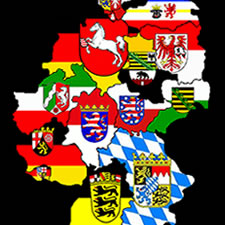
The 9 North German Counties Berlin: Berlin is capital, city and county in one. Berlin has 3.4 million inhabitants. The area of Berlin is 891.85 km² and is, with 3880 inhabitants per square meter, the most populated city in Germany. Berlin became part of the Federal State of Germany in 1990 after the fall of […]

Read the Full Blog Post

Wed, Oct 26th 2011 |
2 Comments
The German verb helfen - to help

The German verb helfen – to help

The verb helfen – to help strong verb, formed with haben Below are the verb tables detailing how the German verb helfen is formed depending on the tense of the sentence. Knowing the different forms of helfen through the tenses will allow you to construct sentences much easier. Present Tense Future Tense Conditional Tense ich […]

Read the Full Blog Post

Wed, Oct 19th 2011 |
No Comments
Düsseldorf - A Guide to Düsseldorf

Düsseldorf – A Guide to Düsseldorf

Düsseldorf – A Guide to Düsseldorf Düsseldorf is the capital of the county Nord-Rhein Westfalen but is by far not the biggest city in the county with only 585 000 inhabitants. That’s why rivalry between other larger cities is high (So don’t mention Cologne in Düsseldorf). Düsseldorf is a very posh and wealthy city with […]

Read the Full Blog Post

Wed, Oct 12th 2011 |
No Comments
The German verb kennen - to know

The German verb kennen – to know

The verb kennen – to know mixed verb, formed with haben Below are the verb tables detailing how the German verb kennen is formed depending on the tense of the sentence. Knowing the different forms of kennen through the tenses will allow you to construct sentences much easier. Present Tense Future Tense Conditional Tense ich […]

Read the Full Blog Post

Wed, Oct 5th 2011 |
No Comments
German Vocabulary - All about Food

German Vocabulary – All about Food

Das Essen – The Food In this post we are looking at German vocabulary around the subject food. The table divides the words into masculine, female and neutral words. This will help you with remembering the genders 🙂 Masculine words der Alkohol alcohol der Apfelsaft apple juice der Apfelstrudel apple strudel der Appetit appetite der […]

Read the Full Blog Post

Wed, Sep 28th 2011 |
4 Comments
The German verb wissen - to know

The German verb wissen – to know

The verb wissen – to know mixed verb, formed with haben Below are the verb tables detailing how the German verb wissen is formed depending on the tense of the sentence. Knowing the different forms of wissen through the tenses will allow you to construct sentences much easier. Present Tense Future Tense Conditional Tense ich […]

Read the Full Blog Post

Wed, Sep 21st 2011 |
2 Comments
The German verb sprechen - to speak

The German verb sprechen – to speak

The verb sprechen – to speak strong verb, formed with haben Below are the verb tables detailing how the German verb sprechen is formed depending on the tense of the sentence. Knowing the different forms of sprechen through the tenses will allow you to construct sentences much easier. Present Tense Future Tense Conditional Tense ich […]

Read the Full Blog Post

Sun, Sep 11th 2011 |
No Comments
Vocabulary: Important German Verbs Part 2

Vocabulary: Important German Verbs Part 2

More Important German Verbs Here is part 2 of important German verbs. Below you will find a list of commonly used verbs in normal German conversation. You should also see part 1 of our Important German Verbs. For additional help on how to use and construct verbs in German, you can also read our other […]

Read the Full Blog Post

Wed, Sep 7th 2011 |
No Comments
German Adverbs

German Adverbs

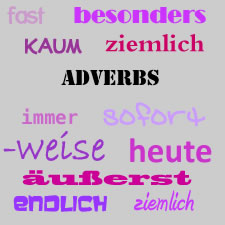
German Adverbs An adverb is a word like “slowly” which is usually used in combination with a verb or an adjective. An adverb will give you further information about when, how or in what circumstances something happens. Most English adverbs end with “ly” (friendly, quickly, really). German adverbs, however, are adjectives which comment on verbs […]

Read the Full Blog Post

Wed, Aug 31st 2011 |
2 Comments
The German verb schwimmen - to swim

The German verb schwimmen – to swim

The verb schwimmen – to swim strong verb, formed with sein Below are the verb tables detailing how the German verb schwimmen is formed depending on the tense of the sentence. Knowing the different forms of schwimmen through the tenses will allow you to construct sentences much easier. Present Tense Future Tense Conditional Tense ich […]

Read the Full Blog Post

Sun, Aug 28th 2011 |
No Comments
South German Counties

South German Counties

The 7 South German Counties Bavaria: At 70,538km², Bavaria is the biggest county of Germany. It’s capital is the metropolis Munich, which is famous for its yearly Oktoberfest (beer festival) and a laid-back traditional atmosphere. Bavaria has a population of 12.5 million. It divides into 3 areas: 1. Franconia to the north, 2. Historic Bavaria […]

Read the Full Blog Post

Wed, Aug 24th 2011 |
No Comments
German Vocabulary: All about Sports

German Vocabulary: All about Sports

Der Sport – Sports In this post we are looking at German Sports vocabulary. The table divides the words into masculine, female and neutral words. This will help you with remembering the genders 🙂 Masculine words der Ball ball der Basketball basketball der Federball badminton der Fussball football der Gegner opponent der Golfplatz golf course […]

Read the Full Blog Post

Wed, Aug 17th 2011 |
No Comments
The German verb rennen - to run

The German verb rennen – to run

The verb rennen – to run mixed verb, formed with sein Below are the verb tables detailing how the German verb rennen is formed depending on the tense of the sentence. Knowing the different forms of rennen through the tenses will allow you to construct sentences much easier. Present Tense Future Tense Conditional Tense ich […]

Read the Full Blog Post

Sun, Aug 14th 2011 |
No Comments
Stuttgart - A Guide To Stuttgart

Stuttgart – A Guide To Stuttgart

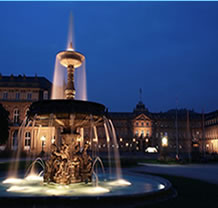
Stuttgart – A Guide to Stuttgart Stuttgart is the capital of the county Baden-Württemberg. Stuttgart has nearly 600,000 inhabitants and is among Germany’s most populated cities. The city’s population has grown rapidly in the last decades. Stuttgart is home to Mercedes Benz, Porsche and some other big companies. On the other hand, Stuttgart is a […]

Read the Full Blog Post

Wed, Aug 10th 2011 |
No Comments
The German verb fahren - to drive

The German verb fahren – to drive

The verb fahren – to drive strong verb, formed with sein Below are the verb tables detailing how the German verb fahren is formed depending on the tense of the sentence. Knowing the different forms of fahren through the tenses will allow you to construct sentences much easier. Present Tense Future Tense Conditional Tense ich […]

Read the Full Blog Post

Sun, Jul 31st 2011 |
1 Comment
How to use German Modal Verbs like a Native

How to use German Modal Verbs like a Native

German Modal Verbs are key to the German Language Modal verbs in German are part of the core language. It is important when learning German to get a good grasp of these verbs as they are used on a very regular basis. A modal verb modifies or emphasises the meaning of other verbs and is […]

Read the Full Blog Post

Wed, Jul 27th 2011 |
9 Comments
German Vocabulary: All about Hotel

German Vocabulary: All about Hotel

Das Hotel – The Hotel In this post we are looking at German vocabulary about spending nights in a hotel. The table divides the words into masculine, female and neutral words. This will help you with remembering the genders 🙂 Masculine words der Aufenthalt stay der Aufzug lift der Balkon balcony der Blick view der […]

Read the Full Blog Post

Wed, Jul 20th 2011 |
No Comments
The German verb bringen - to bring

The German verb bringen – to bring

The verb bringen – to bring mixed verb, formed with haben Below are the verb tables detailing how the German verb bringen is formed depending on the tense of the sentence. Knowing the different forms of bringen through the tenses will allow you to construct sentences much easier. Present Tense Future Tense Conditional Tense ich […]

Read the Full Blog Post

Sun, Jul 17th 2011 |
No Comments
The German articles der, die and das - with video

The German articles der, die and das – with video

Der | Die | Das We all know how difficult it is to guess the right gender if it comes to German nouns. The bad news is: There is no official rule for when to use der, die and das. The good news is: There are guidelines which will make it easier to choose between […]

Read the Full Blog Post

Wed, Jul 6th 2011 |
4 Comments