There is/There are

There is/There are

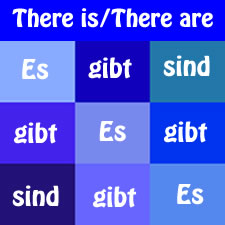
In this blog, we’ll have a look at two important phrases which are used on a daily basis. One of them is the expression: There is and the other one is the plural form There are. There is – Es gibt The expression “Es gibt” is always followed by the accusative case. The object is […]

Read the Full Blog Post

Wed, Jan 26th 2011 |
13 Comments
German Word Order and Sentence Structure Part 2

German Word Order and Sentence Structure Part 2

German Word Order In our first post on the word order of a German sentence, we looked at simple sentences with only one verb. In this article we are going to look at some examples of sentences that contain two verbs. This also includes the German past and future tense and we will give you […]

Read the Full Blog Post

Wed, Dec 29th 2010 |
6 Comments
German Relative Pronouns and how to use them

German Relative Pronouns and how to use them

What is a relative pronoun? A relative pronoun is used to make it clear who or what you are talking about. The English relative pronouns are who, which, whom and that. For example: That’s the woman who bumped into my car last week. This is the house which needs cleaning. The ring that you bought […]

Read the Full Blog Post

Wed, Nov 24th 2010 |
4 Comments
Commands in German - Imperative

Commands in German – Imperative

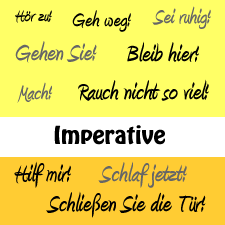
What is a Command in German – Imperative? An Imperative is used when giving commands, orders or instructions like “Shut up!” or “Help me!” In these cases the verb will be formed in a special way. The three different forms of the German imperative: There are three ways of giving commands in German by using […]

Read the Full Blog Post

Wed, Nov 10th 2010 |
10 Comments
Comparatives in German and the Cases

Comparatives in German and the Cases

The Cases with Comparatives in German In our last blog we discussed Comparatives in German. We talked about the connection with the words “als” and “wie” when we compare two things with each other. In this blog we want to show you how to build the comparative in connection with the four cases without using […]

Read the Full Blog Post

Wed, Oct 13th 2010 |
6 Comments
Comparatives in German - Adjectives

Comparatives in German – Adjectives

In this blog we want to look at expressing yourself with comparatives in German. In English, comparatives are written with –er on the end, e.g. easier, stronger, taller, or with use of the word more e.g. more beautiful. Similarly in German, you add an –er to the end of most adjectives. Adjectives that end in […]

Read the Full Blog Post

Wed, Oct 6th 2010 |
3 Comments
How to use Superlatives in German

How to use Superlatives in German

The Best Most Super Superlatives in German In this post we want to look at expressing yourself with superlatives in German. In English, superlatives are written with est on the end, e.g. easiest, strongest, tallest etc. In German, you add ste or este to the simple form of the adjective. Adjectives that end in -t, […]

Read the Full Blog Post

Wed, Sep 29th 2010 |
9 Comments
German Past Tense – The Pluperfect Tense

German Past Tense – The Pluperfect Tense

German Pluperfect Tense Previously we introduced you to some German past tense forms like the perfect tense and the imperfect tense. In this article we will be looking at the pluperfect tense. The pluperfect tense sounds complicated but is actually pretty straight forward. Learn and enjoy the German language with Jabbalab! When to use the […]

Read the Full Blog Post

Wed, Aug 25th 2010 |
4 Comments
German Conditional Tense, What it is and how to use it

German Conditional Tense, What it is and how to use it

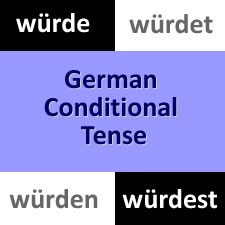
German Conditional Tense Okay, first let’s deal with what the German conditional tense means. It’s one of the more specialised tenses as it deals with a specific situation. This situation is something that would happen or would be true under certain conditions. For example: I would buy you a ring if I had the money. […]

Read the Full Blog Post

Tue, Aug 3rd 2010 |
19 Comments
German Umlaut – What are they and how are they used?

German Umlaut – What are they and how are they used?

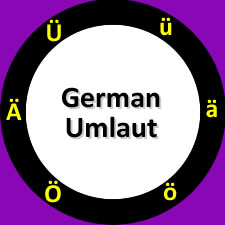
What is a German Umlaut? The German umlaut is recognisable by 2 little dots above a letter. The German umlaut is found on 3 letters, Ä, Ö and Ü. What does the German Umlaut do? When you see a German umlaut above one of the 3 letters, you will know that this is pronounced differently. […]

Read the Full Blog Post

Tue, Jul 27th 2010 |
No Comments
German Future Tense and How to use it

German Future Tense and How to use it

German Future Tense The German future tense is very similar to the future tense in English. To talk about something in the future, you can use the present tense as you do in English. For example: We’re flying to France next year. ⇨ Wir fliegen nächstes Jahr nach Frankreich. Ich spiele morgen Gittare. ⇨ I’m […]

Read the Full Blog Post

Tue, Jul 20th 2010 |
7 Comments
Past Tense German - The Imperfect Tense

Past Tense German – The Imperfect Tense

German Imperfect Tense Here we want to go through how you talk about the past in German. There are a few forms of the past tense in German. We were talking about the perfect tense in our last blog and in this article we will be looking at the imperfect tense. Learn and enjoy the […]

Read the Full Blog Post

Wed, Jul 14th 2010 |
18 Comments
German Past Tense - How to talk about the Past in German

German Past Tense – How to talk about the Past in German

The Perfect Tense – A Common German Past Tense We’re now going to jump back in time to the past tense in German. There are a few different forms of the past tense, but in this article we will be looking at the Perfect Tense. This is probably the most commonly used, especially in the […]

Read the Full Blog Post

Tue, Jul 6th 2010 |
19 Comments
German Separable Verbs and Verb Prefixes

German Separable Verbs and Verb Prefixes

What is a Verb Prefix in German? A verb prefix in German is an additional word such as an (on, to, by), zu (to), weg (away), which is added to the beginning of a verb to change its meaning. We have a similar occurrence in English but the extra word goes after the verb, e.g. […]

Read the Full Blog Post

Wed, Jun 30th 2010 |
6 Comments
How and when to use German Reflexive Verbs

How and when to use German Reflexive Verbs

German Reflexive Verbs A German reflexive verb describes an action of someone (subject) where the action reflects back to the subject. German reflexive verbs are used in connection with a reflexive pronoun. “But what is a reflexive pronoun?” I hear you ask. A reflexive pronoun is an object pronoun. For example: myself, yourself, himself…   […]

Read the Full Blog Post

Tue, Jun 22nd 2010 |
6 Comments
When to use Sie, du and ihr

When to use Sie, du and ihr

Sie, du and ihr In English, there is only one word to say you while in German there are three different words. But don’t worry – the rule for when to use each of these three words is quite straight forward and easy to understand. The three words we are talking about are du, ihr […]

Read the Full Blog Post

Wed, Jun 16th 2010 |
8 Comments
How and when to use the word

How and when to use the word “zu”

The word “zu“ is used in different ways in the German language. 1) The word “zu” is used as a verb prefix. With the English language, a verb prefix is a word like “up” or “down”. These are used with verbs to create new verbs which mean something completely different. get – get up – […]

Read the Full Blog Post

Mon, Jun 7th 2010 |
3 Comments
German Strong Verbs

German Strong Verbs

We discussed in Part 1 how weak Verbs in German are structured and often follow fairly straight forward rules. But what about strong German Verbs? The most common ending for strong verbs is the same as the weak verbs -en Let’s look at a few verbs to illustrate this: schlafen (to sleep) – schlaf (stem) […]

Read the Full Blog Post

Thu, Jun 3rd 2010 |
1 Comment
German Present Tense and the -ing Trap

German Present Tense and the -ing Trap

The -ing Trap The German present tense is a pretty self explanatory title. It‘s used when you want to talk about something that is true at the moment, something that happens on a regular basis and what is happening at the moment. For example: I’m at home. He travels to work by car. I’m playing […]

Read the Full Blog Post

Thu, May 27th 2010 |
1 Comment
How German Personal Pronouns Change with Case

How German Personal Pronouns Change with Case

German Pronouns German personal pronouns are a little more complicated than in English (no surprise there!). It can be tricky to get to grips with but learning the different forms is a vital step in learning the German language. The form that the personal pronoun takes is dependent on the case of the sentence. The […]

Read the Full Blog Post

Thu, May 20th 2010 |
11 Comments